Dropshipping is a business model that has begun dominating the e-commerce industry.
It’s one of those low-risk high-reward types of business models, as you don’t have to invest so much in stocking inventory.
Join me, as I’ll be making you understand what dropshipping is, its benefits, and finally how you can integrate dropshipping with your e-commerce store.
By the end of this article, I’m sure you’ll know all you need to do to get it right.
What is Dropshipping

Dropshipping is a business model where you have the option of outsourcing the order fulfillment process of procuring, storing, and shipping the products to your customers.
The way it works is that the drop shipper acts as the middleman between the supplier/company that makes the product and the customer who wants to buy the product.
When a customer orders a product from the drop shipper, he connects them to the supplier, and then the manufacturer/distributor sends the products directly to the customer.
What a dropshipper essentially does is market the products.
As a drop shipper, you don’t own any inventory or handle any of the shipping responsibility.
Now you know what dropshipping is and exactly how it works.
What are the advantages of dropshipping compared to other business models?
What are the benefits you will enjoy?
Advantages of Dropshipping

Low start-up costs
Unlike the traditional retailer, which faces a high starting cost because they will need to purchase inventory upfront.
With dropshipping, you don’t have to buy inventory in advance.
This means that you can easily start your e-commerce store with a minimal initial cost.
When the need to invest in inventory is removed, you can allocate your resources toward other aspects of your business, like marketing, website development, and customer service.
All the things you need so your business as a drop shipper can run smoothly.
There is no need for inventory management
Managing inventory can be a complex and time-consuming task for you as an e-commerce business owner.
With dropshipping, you don’t ever have to handle the products physically.
Instead, the supplier ships the products directly to your customer
By doing this, you eliminate the need to keep products in a warehouse, track inventory, or suffer the risk of overstocking or understocking products.
When you do this, you can focus on growing your business without worrying about inventory logistics.
Flexible location and expandability
Dropshipping allows you to run your e-commerce business from anywhere in the world.
With dropshipping, you are not tied down to a physical location, giving you the flexibility to work remotely or even travel while still managing your store.
Also, dropshipping has a lot of potential for expandability.
Since you don’t have to manage inventory or even deal with logistics or order fulfillment. And if you’ve invested in a fulfilment agency like Globallyfulfill, you’ll have more time on your hands.
So, you can easily expand the offering of your products and reach new markets without necessarily having to spend so much.
As your business grows, you can easily scale up by adding more products to the ones you offer for sale, partnering with more suppliers, manufacturers, or distributors, and using excellent marketing strategies.
With drop shipping, you get to enjoy the flexibility needed to adapt to the changes in market conditions and trends and grow your e-commerce store efficiently.
Now that you know what dropshipping is and the benefits you can enjoy when you incorporate this business model.
The next thing you need to learn about is all the things you need to know and do to integrate dropshipping into your e-commerce store.
Steps to take to start Dropshipping

Selecting products to sell
The first thing you need to choose is the products you need to sell in your dropshipping business.
Here are some strategies you can use when doing this.
Identify profitable product niches
You start by identifying product niches that have high demand and profit potential.
When doing this, you should consider categories that align with your expertise and cater to your target audience.
You have the autonomy to choose whatever it is you want to sell.
You can research trending topics or things that are emerging in the market for you to sell in your e-commerce store.
Conducting market research
Conducting market research is very important for validating the demand for products and identifying other potential opportunities.
Use tools like social media, Google Trends, or keyword research to see what kind of products people are demanding.
How to select the best products to sell
Analyze trends in the industry you’re willing to get into. Take into consideration things that may influence demand for products, like seasonal fluctuations and emerging trends.
You should also study your competitors to fully understand the kind of products they offer, how they price their products, and their marketing strategies.
Identify the things they are not doing well and use that as an opportunity to offer value to your customers.
Also, don’t take customer reviews and feedback lightly, pay attention to them and address them to ensure customer satisfaction.
Then invest in a good fulfillment agency like Globallyfulfill so they can find high quality products for you. So, after selecting the specific products you want to sell, you’ll communicate with your fulfillment agency and they’ll source them out by vetting suppliers.
How to integrate dropshipping with your e-commerce store.
The first step you need to take is to select your suppliers.
Selecting your Dropshipping Suppliers
This is a very crucial stage because they are the key players in your business model.
Without them, you won’t have products to sell to your customers.
You should start by researching to find a reputable supplier in your chosen niche.
Look out for suppliers that are credible and reliable, sell quality products, and offer good customer service.
When choosing your suppliers, look out for the ones that are responsive and have good communication, as well as those that are willing to resolve any issues that may come up promptly.
Once you have selected a supplier of your choice, you can now integrate dropshipping in your online store.
Connect your website with your dropshipper’s order management system.
You need to do this so when a customer places an order, it is sent to the supplier for fulfillment.
At the same time, the customers will be provided with their order number so they will know their order went through.
You can do all these things through an inventory management software which will be hooked to your website.
Your website will handle all customer relations.
Your customers do not know where their products are coming from.
They are buying from you because they saw it on your website, so if anything goes wrong, like them missing their shipping order or if they want to make an update or cansek their order, they will contact you.
Set up shipping costs
Since your customers have contact with only you, you are the one that needs to collect the shipping cost and sales tax from them. Or if you’re using a good fulfilment agency like Globallyfulfill, they’ll tell you what it is.
Remember your customers don’t have any direct access with your supplier, even if they are the ones that package the orders and send them.
Have a returns policy
This is a challenge that dropshipping comes with.
Due to the fact that you do not manage inventory, it is up to you to make sure your suppliers make returns to your customers correctly, and this may come with an additional cost.
You must have a returns policy that is clearly stated on your website.
Managing Orders and Fulfillment
You already know the products you want to sell and the suppliers you want to get them from.
The next thing you should focus on is how to streamline your order fulfillment process.
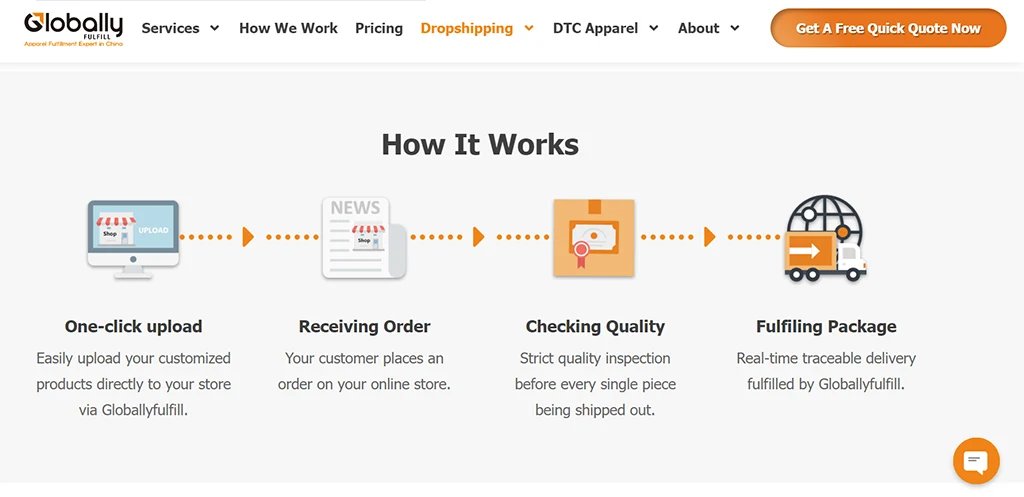
Integrating your e-commerce store with a dropshipping platform allows orders to be transmitted to your suppliers without any manual intervention, saving you time and reducing the risk of errors.
Collaborating with a dropshipping service will help you focus on other things like marketing and optimizing your website while they take care of logistics, inventory handling, and even offering returns to your customers.
Marketing and driving sales on your eCommerce store
Now this is where you need to put a lot of work.
You need to market your platform and optimize your website so that your customers can find you.
Here are some strategies you can adopt.
Social media marketing
You should utilize platforms like Facebook, Instagram, and Pinterest to showcase your products and also to engage with your potential customers.
Partnering with influencers
You can collaborate with influencers in your niche so you can reach a broader audience through them.
Identify those influencers whose content aligns with your target market and negotiate partnerships with them for sponsored content or product reviews.
Here is a detailed post that explains how to grow your dropshipping business with influencer marketing.
Content marketing
Create valuable content such as blog posts, guides, and videos related to your products and industry.
This will attract organic traffic.
Also, optimize your website and product pages for search engines.
Use keyword research and create high-quality content to make your search engine rank highly.
Conclusion
Integrating dropshipping offers you a LOT of benefits.
That is, if you do it right, and you can’t get it right if you don’t even know how it works
We have seen exactly how dropshipping works and how you can integrate dropshipping into your e-commerce store.
From selecting the right products to sell to choosing credible and reliable suppliers for your brand to seeing ways to streamline the order fulfillment process to effectively market your products.
We have covered all these aspects in depth.
Follow these strategies to get it right with dropshipping.